Careful tree work for Cabarrus County homes, done once and done well.
We remove and trim trees, look after oaks and pines, take out Bradford pears, grind stumps and clear storm damage at any hour in Concord and the north Charlotte metro. An ISA Certified Arborist is on staff, our insurance certificate is yours to read before work starts, and the people pricing your job can tell a water oak from a willow oak and a city-owned tree from one that belongs to you.
Book a free look at your tree
A same-day callback, a free look at the tree, and a written price. Nothing happens until you say go.
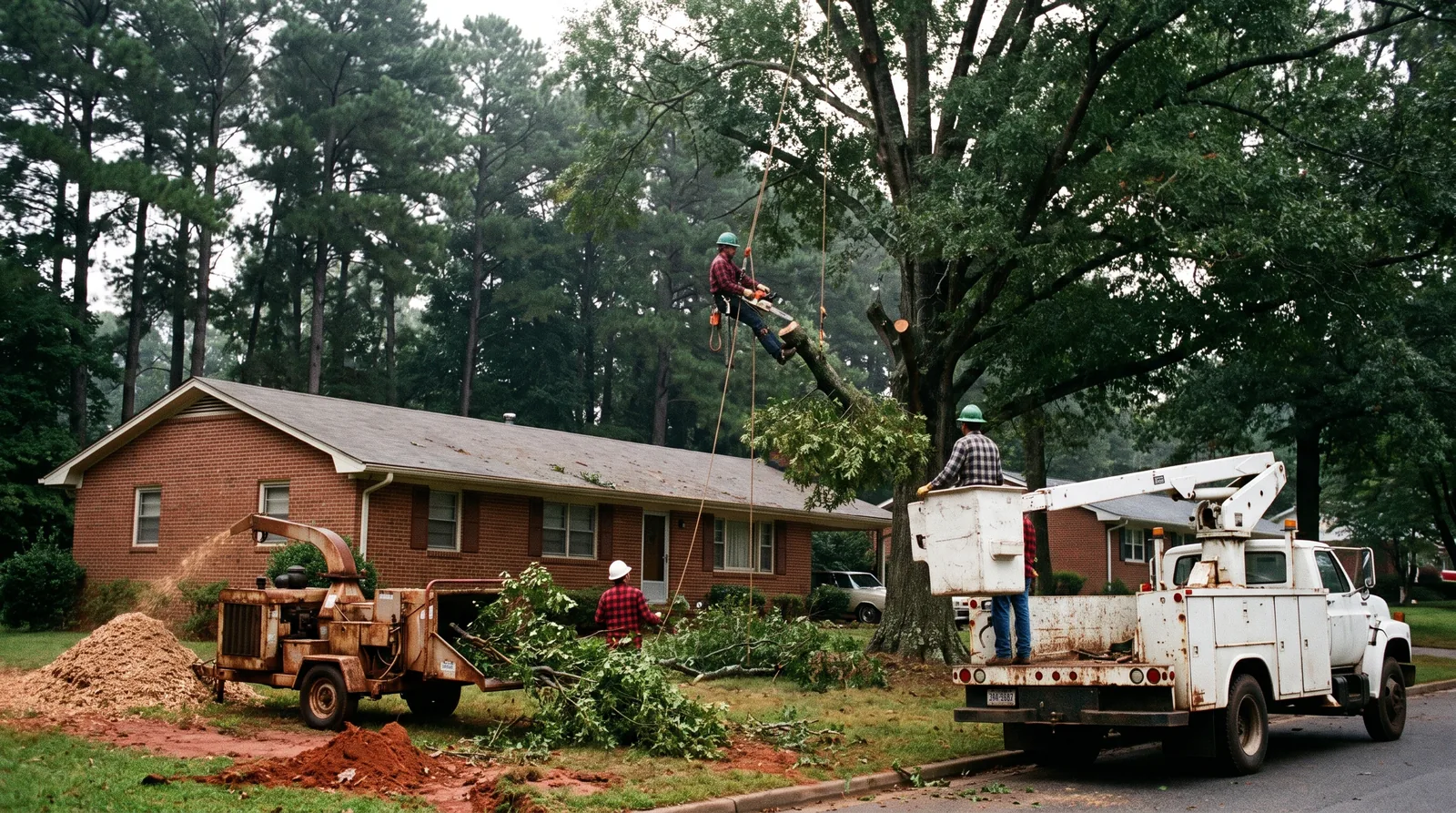
Tree care for red clay, aging oaks and fast-growing pines
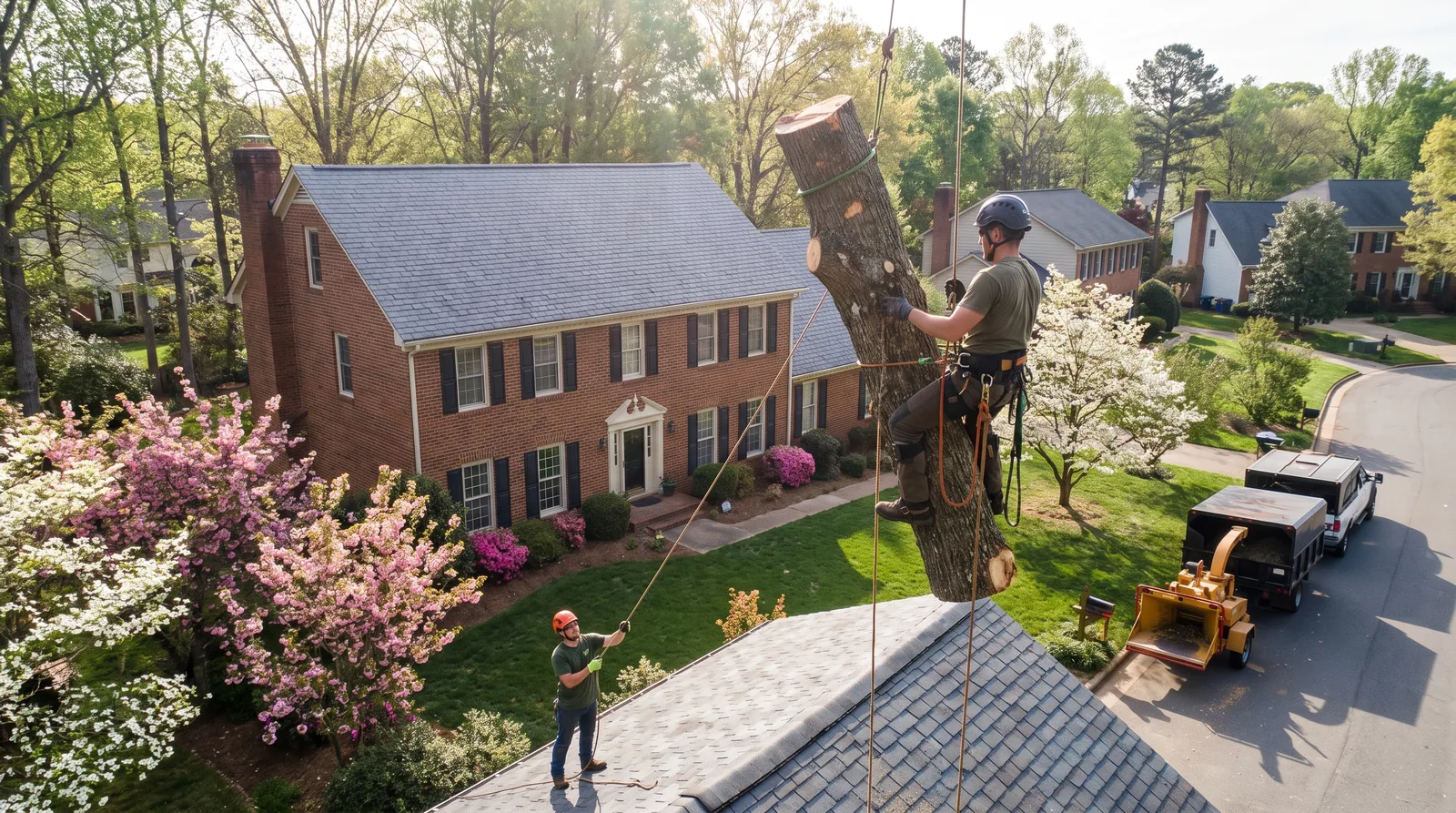
Tree removal
Trees that are dead, failing, leaning or simply in the way. Over a roof, a deck or the service drop we climb them and lower them in sections. With room to fall we fell them whole, and when a crane is the safer route we bring one in.
Removal and prices →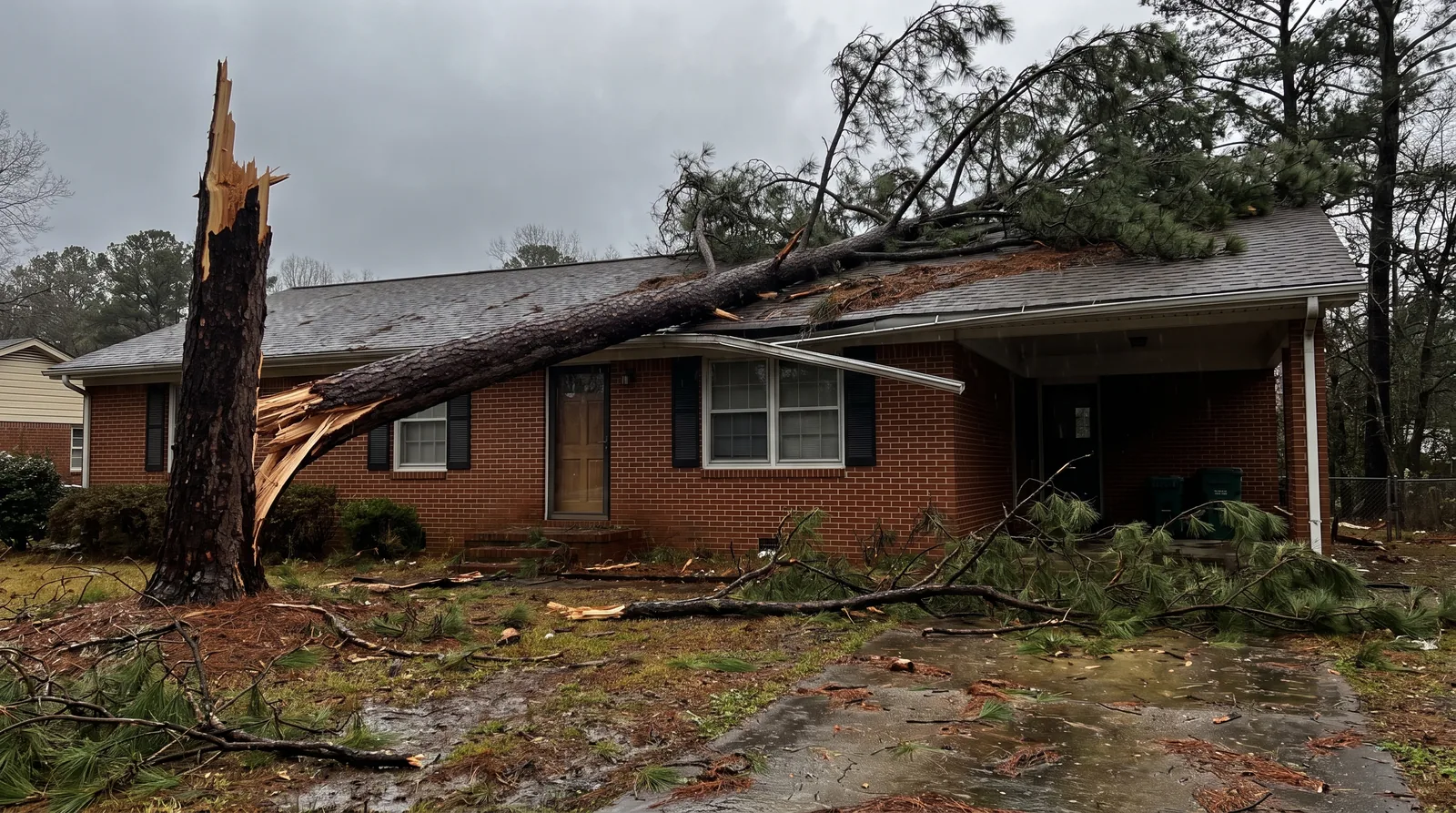
Emergency & storm service
A pine on the roof, an oak across the drive or a broken limb hanging over the sidewalk after ice or a summer storm. We pick up at any hour and keep the photos and records your insurance company will ask for.
Storm service, day or night →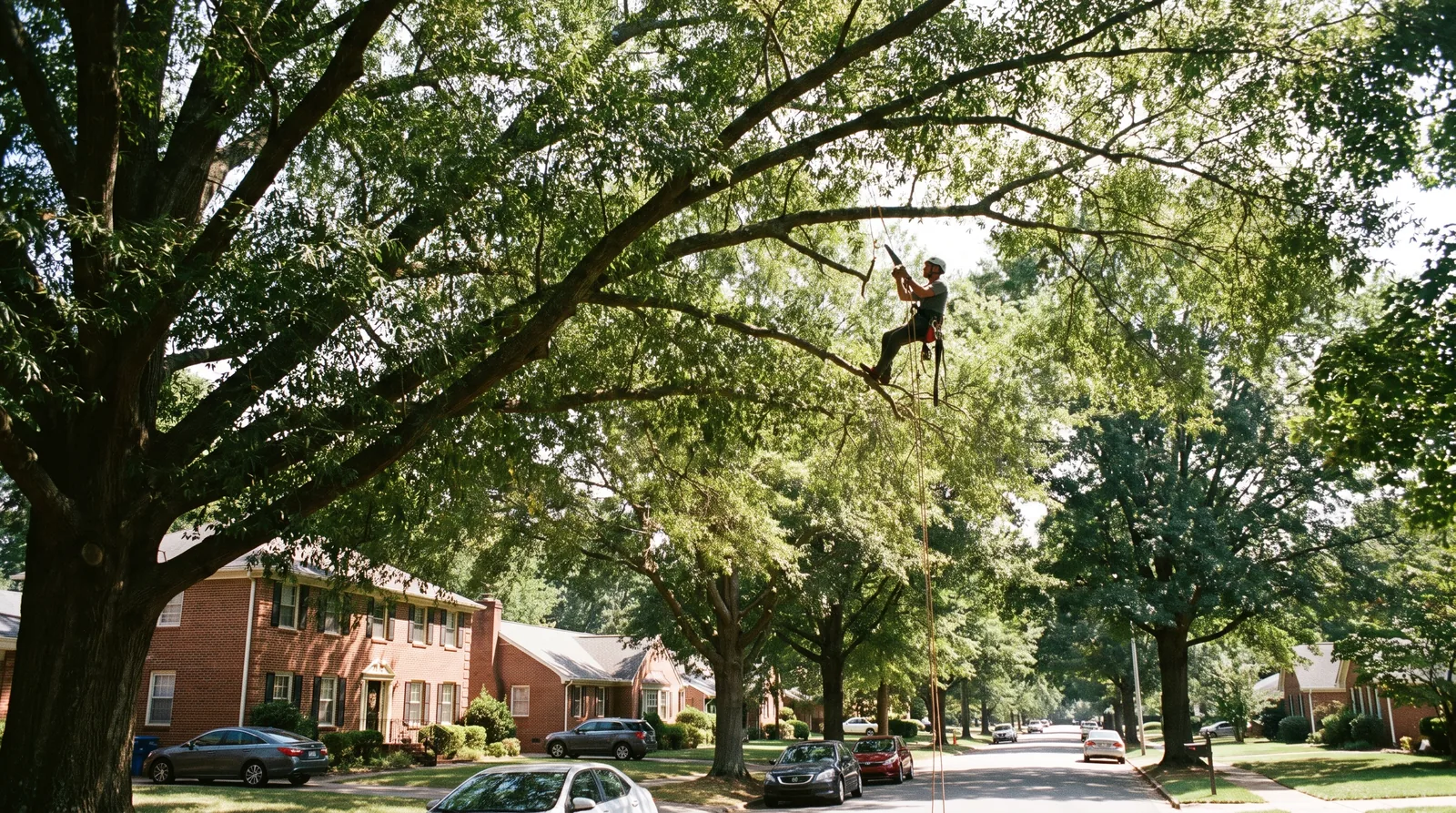
Tree trimming & pruning
Deadwood taken out, crowns cleaned, young trees shaped and limbs lifted off roofs, wires and driveways. Each cut sits at the branch collar so the tree can close it over. We do not top trees.
How we prune →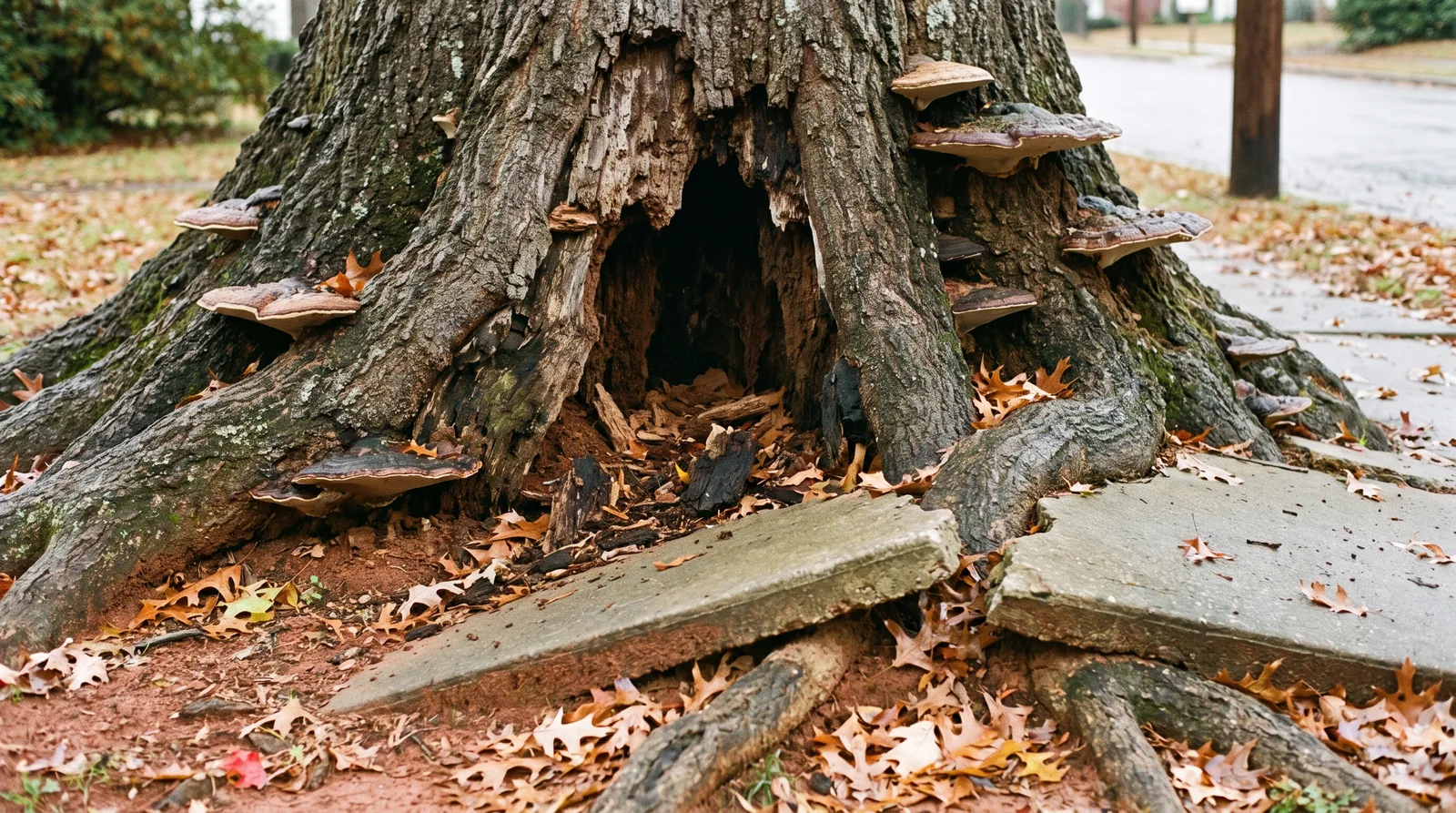
Oak tree service
We check willow, water, white and red oaks for decay, prune them for a strong structure, add cables when a split is beginning and take them down once the trunk has gone hollow.
Caring for oaks →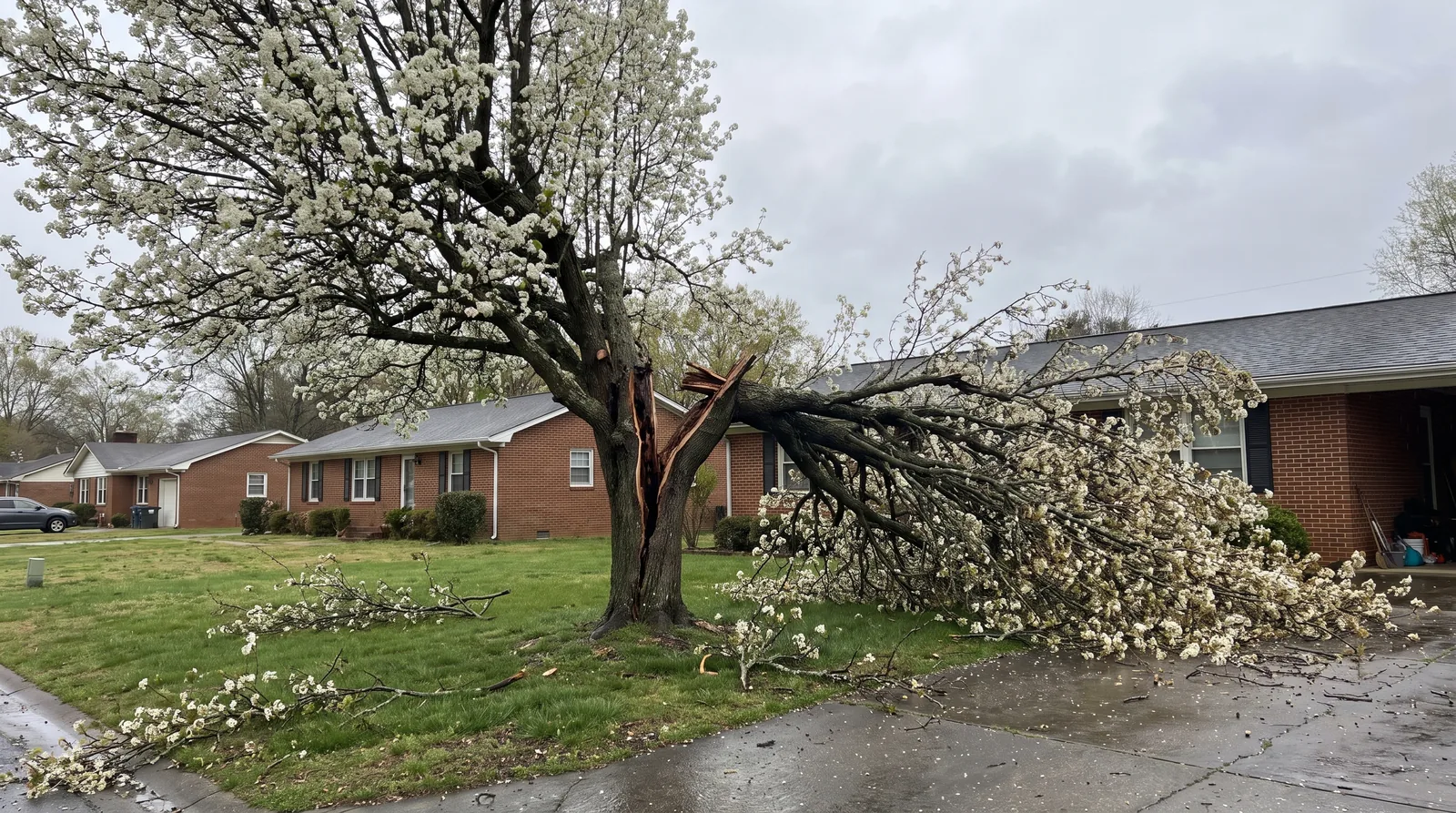
Bradford pear removal
This tree breaks apart in storms and spreads thorny thickets along creeks. We cut it down, grind the stump and help you replace it with a native tree through the NC Bradford Pear Bounty.
Getting rid of Bradford pears →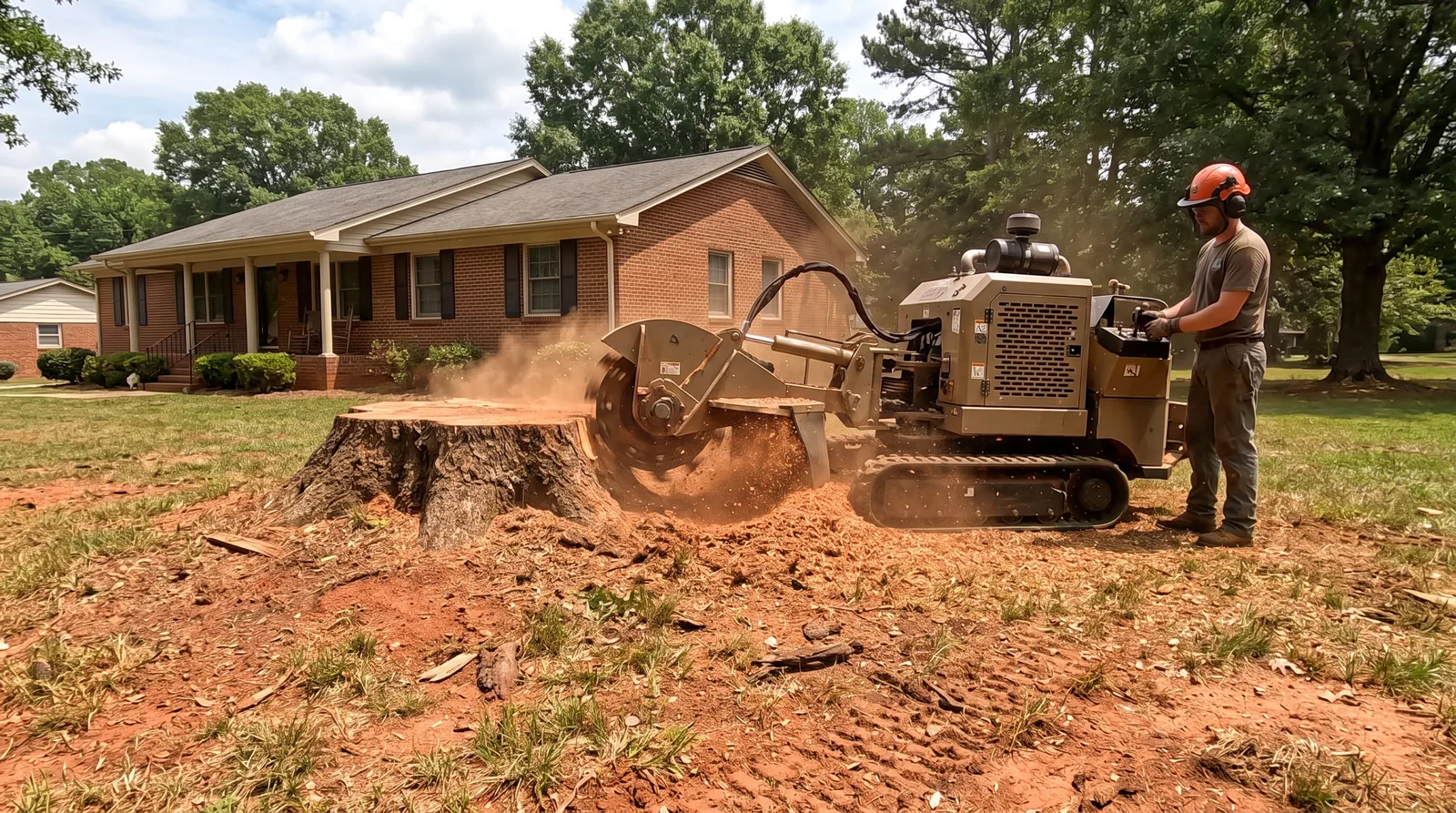
Stump grinding
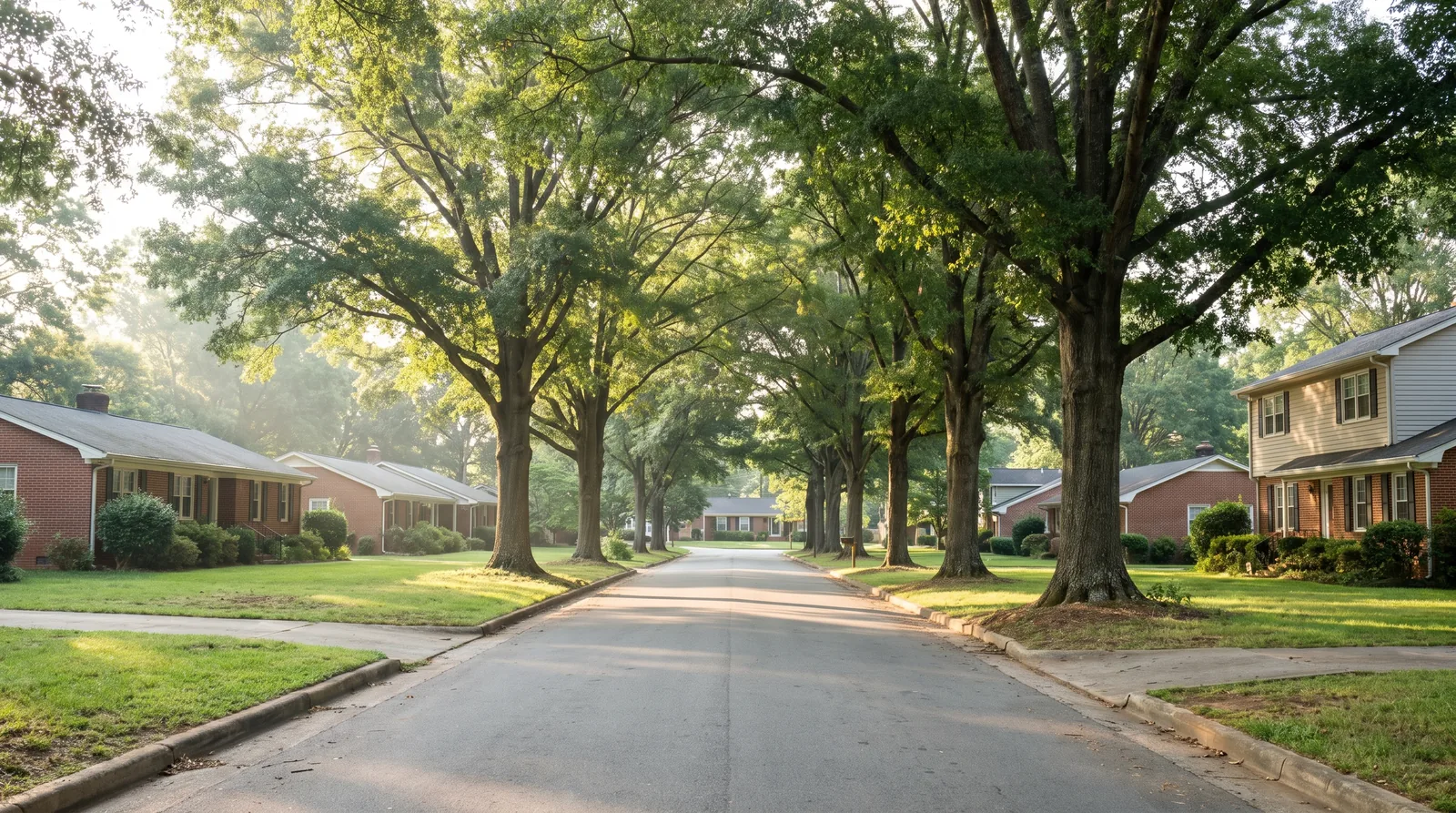
We grind 8 to 12 inches below the surface, follow the surface roots, rake up the chips and backfill the hole so fescue seed or a new planting can go on top.
Stump grinding details →From your first call to a raked lawn
Get in touch
Phone us or use the form, day or night, and describe the problem. It might be a pine that has started to lean, an oak shedding limbs, a stump you keep mowing around or a piece of land that needs clearing.
We come out at no charge
The arborist checks the tree, how the equipment will reach it and what sits below it, such as the house, a deck, a fence or the power drop. Then you get a plain recommendation: prune, cable, remove or leave it be.
The price in writing
Every part is listed on its own line: the removal, rigging or a crane, hauling, the stump and any city or HOA paperwork. The figure holds for 30 days.
Work finished, yard cleaned
Most jobs take a single day. We chip the wood, haul away the debris, rake the lawn and blow off the driveway, then book stump grinding if you want it.
Old mill-village oaks, heavy clay and a storm record that keeps repeating
Before the speedway, Concord was a mill town. The neighborhoods around Gibson Mill and Locke Mill, and around the old Cannon operations up in Kannapolis, were built on small lots under big shade trees. Willow oaks, water oaks and tulip poplars went in between the 1920s and the 1960s. Those trees are 60 to 100 years old now, and many hold a 90-foot canopy over brick houses that were never designed to sit under one.
The ground beneath them is Cecil clay, the official state soil of North Carolina. By August it is nearly as hard as brick, and by February it is holding water. Loblolly pines keep their roots shallow in it and tip over in the wind. Water oaks rot from the inside and let limbs go with no warning. Bradford pears, which went into nearly every 1990s subdivision between Moss Creek and Highland Creek, tear apart at the crotch the first time ice weighs them down. Hugo in 1989, the 2002 and 2014 ice storms, and Debby and Helene in 2024 broke the same kinds of trees in the same places.
That history shapes how we work. We inspect before we recommend anything, we prune rather than top, we cable oaks that deserve to stay, and we read the city code instead of guessing at it. We keep the ten feet around Concord Electric Systems and Duke lines clear, as OSHA requires. We are here all year, so we are still picking up the phone after a storm, unlike the out-of-state trucks that arrive for two weeks and then disappear.
Historic North Union Street, Highland Creek, Skybrook and the streets in between
We work somewhere in Concord every day. That includes the historic blocks off North Union, Gibson Village and Logan, the older ranch houses on Branchview and Burrage, the Poplar Tent and Cox Mill corridors, Christenbury, Moss Creek, Afton Village, Skybrook and Highland Creek, plus the newer subdivisions on Roberta Road and Rocky River Road heading toward Harrisburg.
Outside the city we serve Kannapolis, Harrisburg, Mount Pleasant, Midland and Locust. Over the county line we also go to Huntersville, Cornelius, Davidson, Mooresville and University City in Charlotte.
View every town we cover →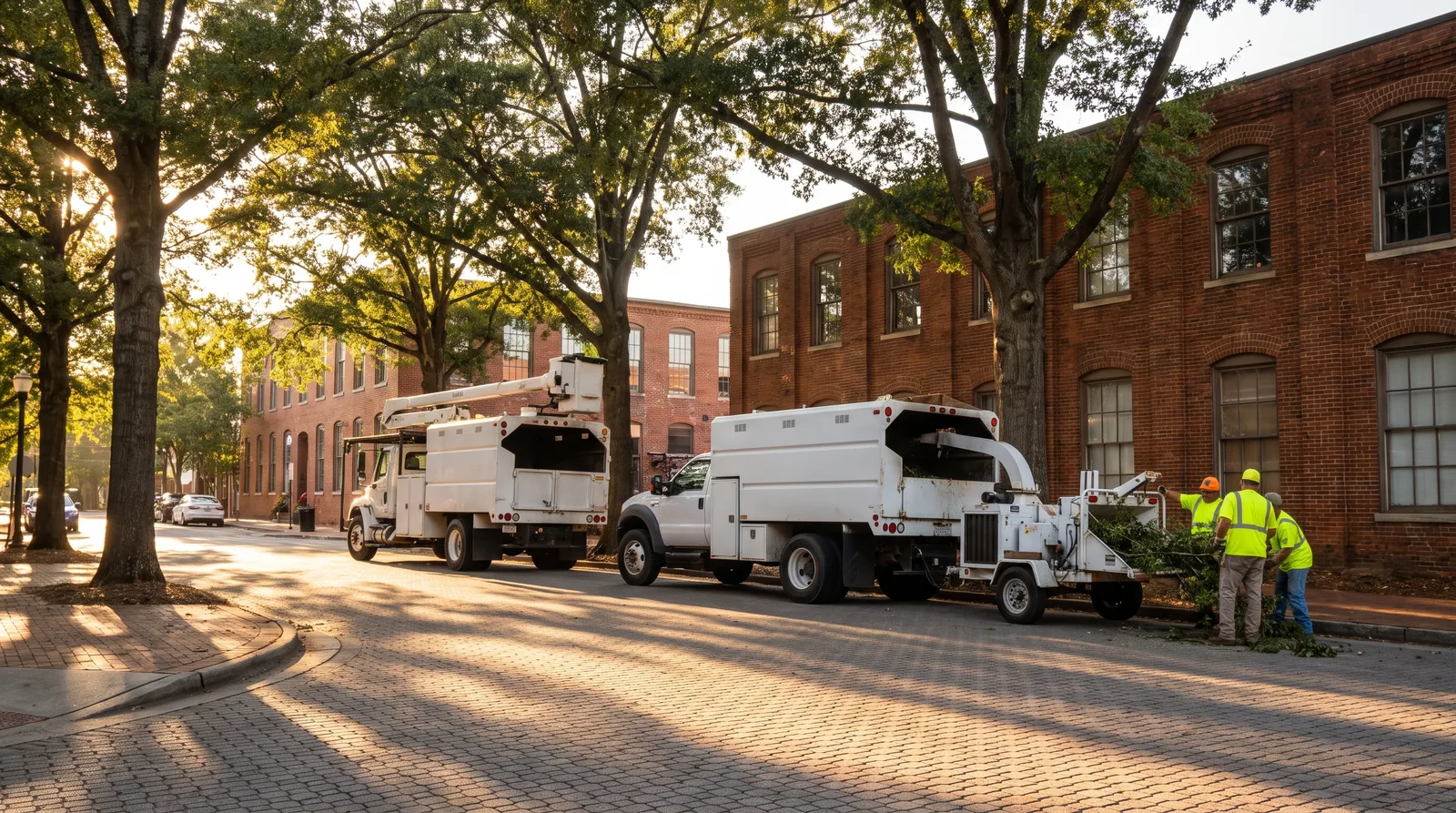
What people around Concord usually want to know
Will the city make me get a permit to take down a yard tree?
In our experience, not for a tree in the yard of an existing single-family house. Concord keeps its tree and landscape rules in Article 11 of the Concord Development Ordinance, and those rules apply to development and redevelopment plans: the buffers, street trees and planting yards a builder must put in and maintain. Public trees are a separate matter. Chapter 50 of the city code (Ord. 19-25, adopted April 2019) makes it unlawful to remove or harm a tree on city property, in the street right-of-way or in a public easement, and the city arborist must be contacted before anyone digs inside a public tree's critical root zone. HOA covenants and the North Union Street historic district add steps of their own. We work out which of these categories your tree falls into before any cutting starts.
What does it usually cost to take a tree down around Concord?
Most removals in Cabarrus County come in somewhere from $450 to $3,500. The low end is a small dogwood or a Bradford pear with open ground around it. The high end is something like a 70-foot willow oak leaning over a brick ranch, a pool or the power drop, which has to be climbed and lowered in pieces or lifted out by crane. Stump grinding is a separate charge, worked out per inch. You receive an itemized price in writing at the property before anything is cut.
Why are water oaks and pines such a problem in local yards?
The neighborhoods built between the 1950s and the 1980s, such as Logan, Gibson Village and the streets off Branchview and Union, were planted with quick growers: water oaks, willow oaks, tulip poplars and loblolly pines. For an oak, the water oak has a short life. Somewhere between 60 and 80 years it goes hollow and begins shedding limbs. Loblollies keep shallow roots in red Cecil clay, which turns to mud in a wet winter, so the wind pries them over. Willow oaks and white oaks, on the other hand, can last for generations with proper pruning. Most of the job is knowing which of these is standing over your roof.
How do you prune crape myrtles?
Not with the 'crape murder' cut that leaves knobby stubs every February. Topping a crape myrtle grows a mop of weak shoots, damages the bark and lets rot in. We take out suckers, crossing branches and old seed heads, open up the middle, and keep the natural vase form the tree was bought for.
Will someone actually pick up at 2 AM after a storm?
Yes, at every hour of every day. Hugo crossed Concord in September 1989 with hurricane-force gusts. The December 2002 ice storm cut power to about 1.8 million customers across the Carolinas. In September 2024 the remnants of Helene put trees on roofs from Kannapolis to Harrisburg. When a pine has come through the kitchen ceiling at 2 AM, the first hour counts. Call and tell us what happened, and you will get a call back with a plan and an arrival time instead of a voicemail box.