Bradford pear removal: the tree that splits in every ice storm
Every 1990s subdivision in Cabarrus County has them. They smell bad in March, split at the trunk in the first ice storm, and seed thorny thickets down every creek. We take them out and help you replace them with something that will last.
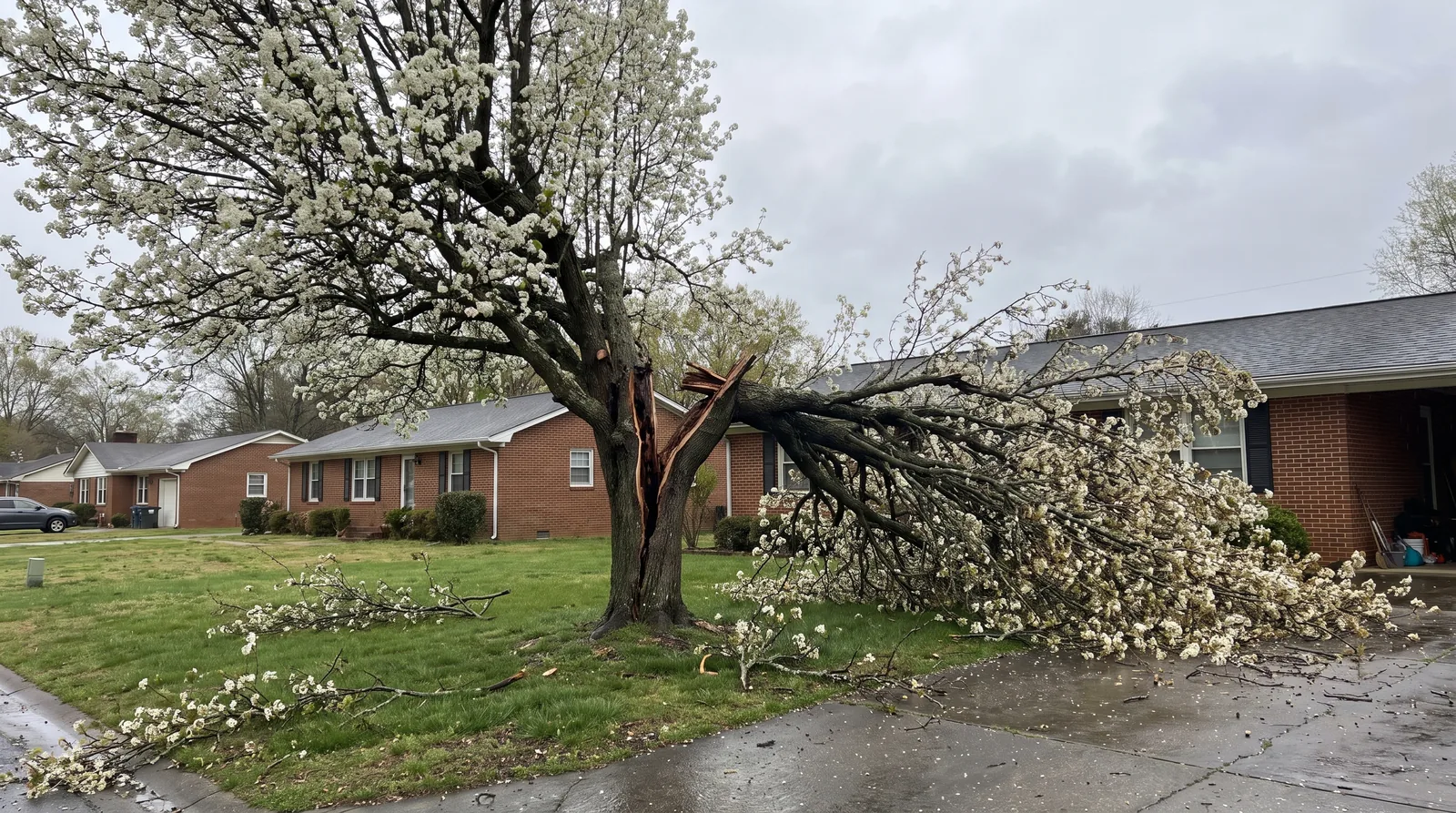
The Bradford pear was the perfect subdivision tree in 1992: cheap, fast, tidy, white flowers in March. By 2012 the problems were obvious. Its branches all originate from one point on the trunk, with bark pinched between them, so the tree literally pulls itself apart under snow, ice or a strong wind — usually at 15 to 25 years old, which is exactly where Moss Creek, Christenbury and the older Highland Creek phases are now. And the cultivars cross-pollinate, so every bird that eats the fruit plants a wild, thorny Callery pear along the Rocky River and every creek and fence line in the county.
Removal is straightforward — they're small trees, rarely over 40 feet — and the stump grinds easily. The smart part is what goes back. Through the NC Bradford Pear Bounty, run by NC State Extension with the NC Forest Service, the NC Urban Forest Council and the NC Wildlife Federation, homeowners who cut down a Bradford pear can pick up a free native replacement — up to five per household — at regional events, with before-and-after photos as proof. We'll take the photos and tell you how to register.
What's included
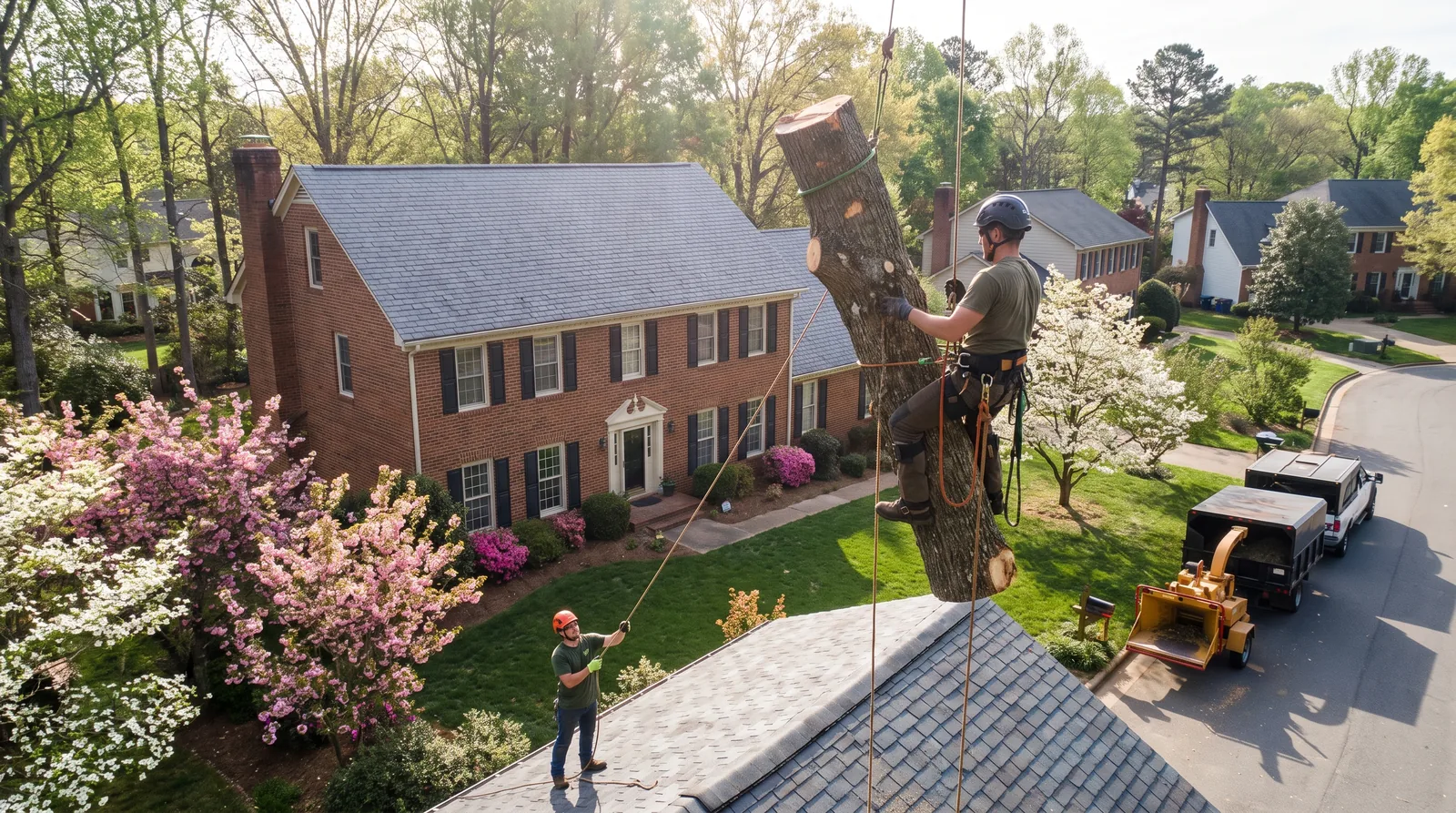
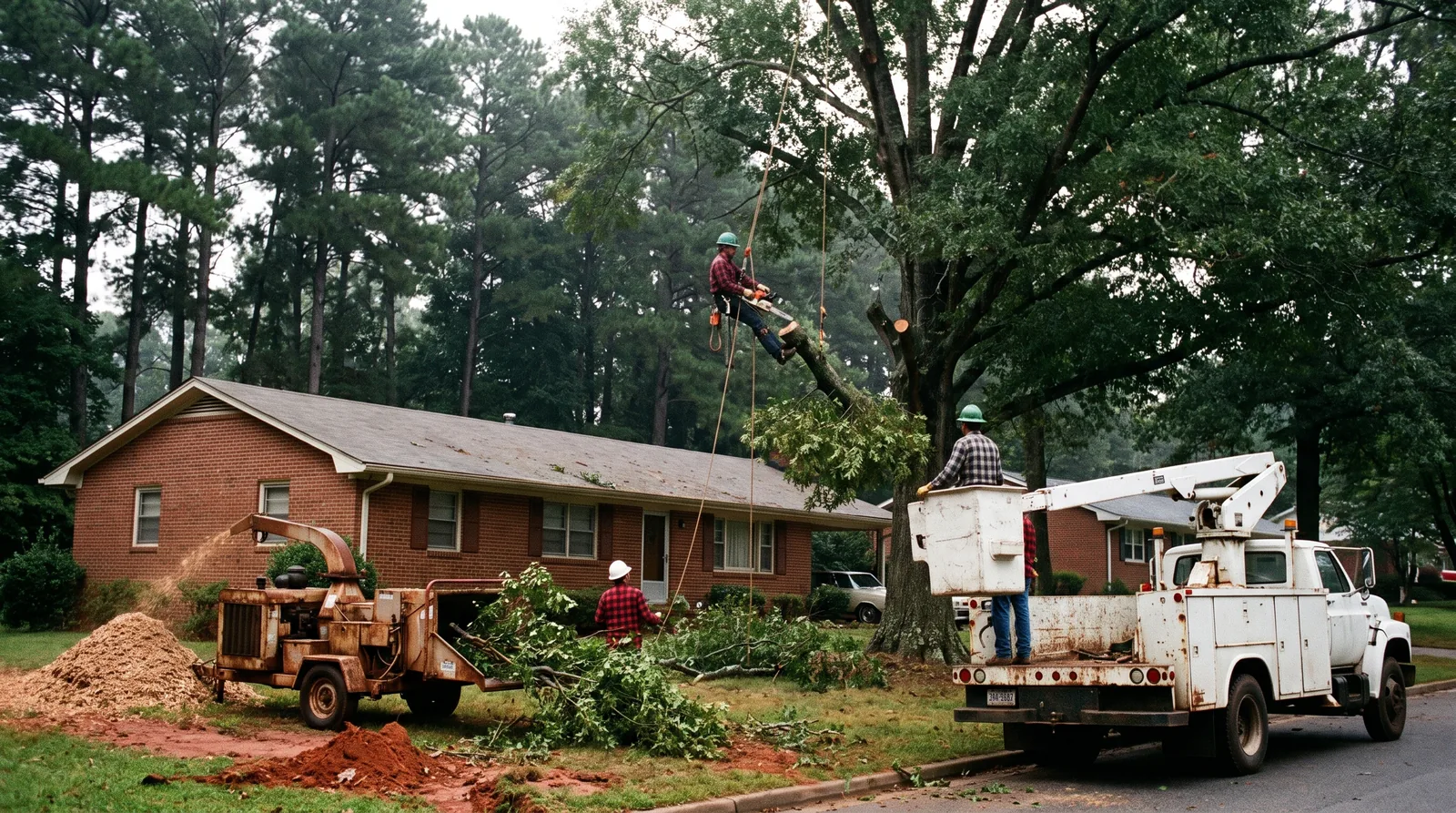
Whole-tree removal
Dropped and chipped where there's room; sectioned over driveways, fences and sidewalks.
Split-tree emergency work
Half a pear on the car or the driveway after a storm — cleared any hour.
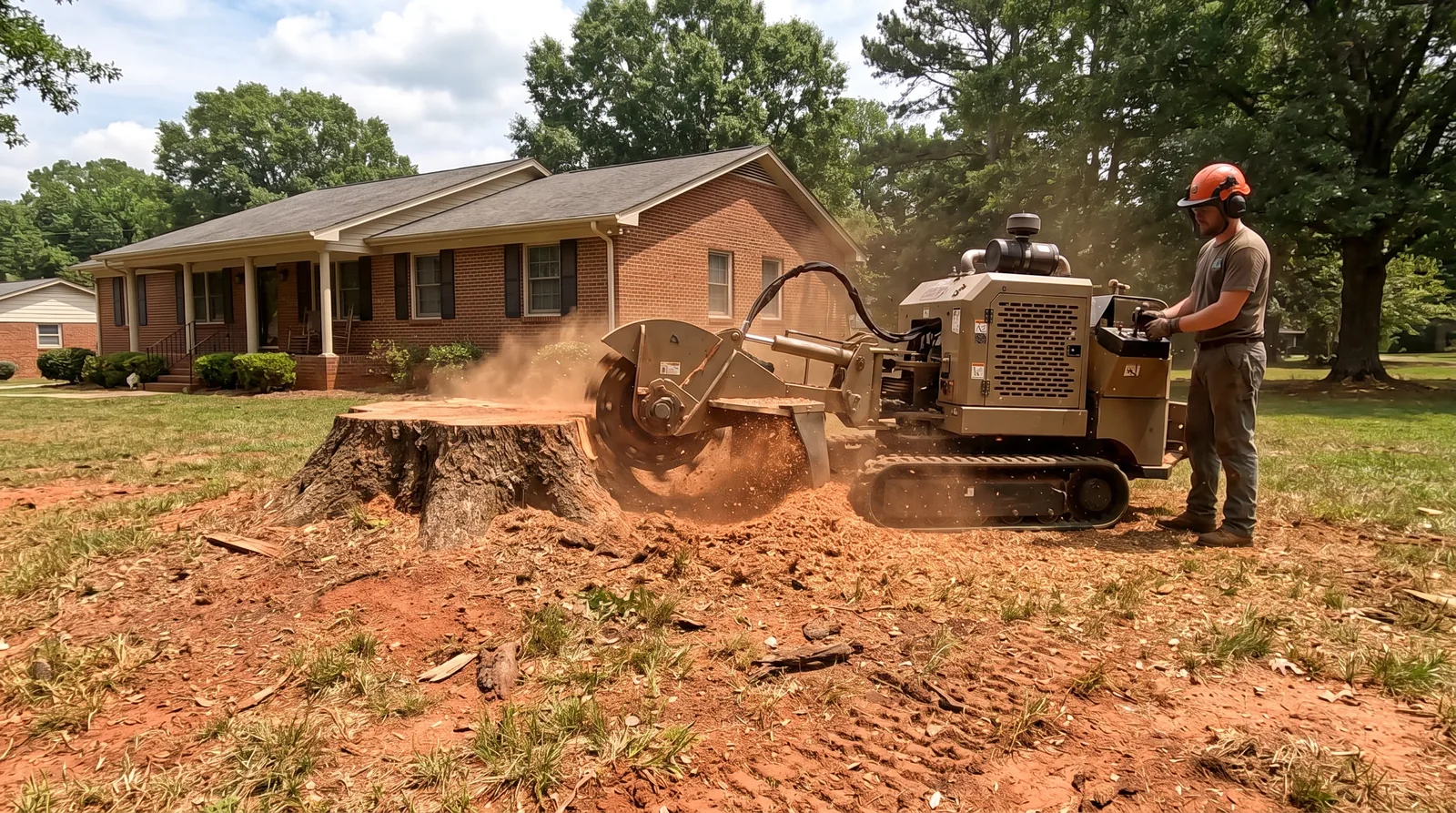
Stump grinding
Ground below grade; pear stumps re-sprout aggressively if they're left.
Sprout control
Root suckers and the thorny wild seedlings along the fence line cut and treated.
Bounty photos & paperwork
Before-and-after photos for the NC Bradford Pear Bounty registration.
Native replacement
Serviceberry, redbud, fringe tree, black gum, red maple or a white oak planted in its place.
Bradford pear removal cost in Concord, NC
| Job | Typical price | Notes |
|---|---|---|
| Bradford pear removal, single tree (20–35 ft) | $300 – $750 | Open access |
| Bradford pear over a driveway or fence | $500 – $1,000 | Sectioned |
| Row of 3–6 pears (subdivision front yards) | $900 – $3,000 | Priced as a group |
| Stump grinding | $100 – $250 each | Prevents re-sprouting |
| Split pear, emergency cleanup | $350 – $1,200 | Any hour |
| Native replacement tree, planted | $250 – $600 | Or free through the NC bounty |
These are 2026 Cabarrus County ranges so you can budget. Your written price is itemized — removal, rigging or crane, hauling, stump grinding, any paperwork — and good for 30 days.
Recent work
Questions we get about bradford pear removal
Is it illegal to plant a Bradford pear in North Carolina?
Not as of 2026. South Carolina, Ohio and Pennsylvania have banned sales; North Carolina hasn't, though the NC Bradford Pear Bounty exists precisely to get them out of yards. Many HOAs and towns have quietly dropped them from approved planting lists.
How does the NC Bradford Pear Bounty work?
You pre-register on the program's website, cut the tree down (the program doesn't pay for removal), bring before-and-after photos to a scheduled regional event, and receive a free native tree for each pear removed, up to five per household. Events have run from the mountains to the coast; check the schedule for the Charlotte area each spring and fall.
Why do Bradford pears split?
Because every major limb grows from the same spot on the trunk at a tight angle, with bark trapped in the union instead of wood. The unions are the weakest part of the tree, and ice, snow or wind loads them until one lets go — taking a third of the crown with it. Pruning can't fix the structure; it was built in at the nursery.
What should I plant instead?
For a similar size and spring flower: serviceberry, eastern redbud, fringe tree or a flowering dogwood in part shade. For real shade over the long haul: white oak, willow oak, black gum or a red maple. All of them feed local birds and insects, which a Bradford pear essentially doesn't.
Will the stump grow back?
Yes, aggressively, and the sprouts are the thorny wild type. Grind the stump and treat the root sprouts, or you'll be cutting a Callery pear thicket in three years.